Guía de selección de sistemas de seguimiento de activos RFID: Cómo elegir la solución RFID adecuada para su negocio (2026)
Jul 23, 2026
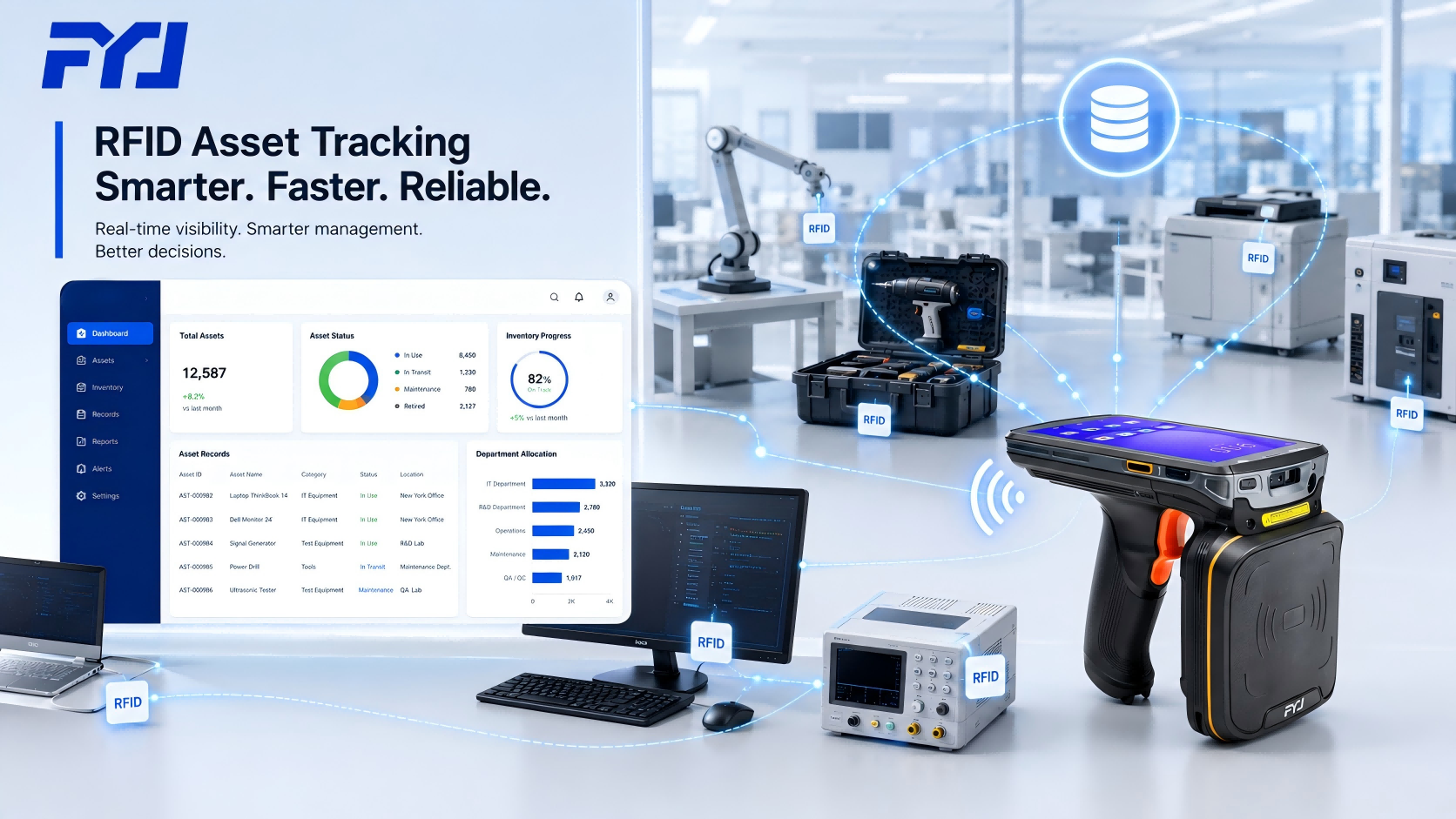
Respuesta rápida Un sistema de seguimiento de activos RFID conecta los activos físicos con los registros digitales a través de etiquetas RFID, lectores RFID, dispositivos portátiles y software de gestión de activos.Al seleccionar una solución RFID, las empresas deben centrarse en varias cuestiones prácticas:¿Qué tipos de activos necesitan ser gestionados?¿Dónde se utilizan estos activos?¿Con qué frecuencia se realiza el inventario?¿Los empleados necesitan operaciones móviles o identificación automática?¿Qué método de implementación se adapta mejor al entorno de TI?El mejor sistema RFID no siempre es el más avanzado. En muchos casos, la mejor opción es la solución que se adapta al flujo de trabajo y a las necesidades de gestión reales de la empresa. ¿Qué es un sistema de seguimiento de activos RFID? Un sistema de seguimiento de activos RFID otorga una identidad digital a los activos físicos.Cada activo lleva una etiqueta RFID. Los lectores RFID o los dispositivos portátiles recopilan información de esas etiquetas, y el software de gestión de activos almacena y organiza los datos.Un sistema completo de seguimiento de activos mediante RFID generalmente incluye:Etiquetas RFIDLas etiquetas se adhieren a los activos físicos y almacenan información de identificación única.Dispositivos de lectura RFIDDispositivos como los terminales PDA portátiles RFID y los lectores fijos recopilan información sobre los activos durante el inventario o el traslado.Software de gestión de activosEl software gestiona los registros de activos, los resultados del inventario, el historial de transferencias, la responsabilidad del usuario y la elaboración de informes.En conjunto, estos componentes ayudan a las empresas a responder preguntas que son difíciles de gestionar mediante hojas de cálculo o registros manuales:¿Dónde se encuentra ubicado un activo?¿Quién es el responsable actualmente?¿Ha sido transferido?¿Cuándo se realizó el último inventario?¿Coincide el activo físico con el registro del sistema?El seguimiento de activos mediante RFID se utiliza comúnmente en:Gestión de equipos de fabricaciónGestión de activos fijos empresarialesSeguimiento de equipos de laboratorioGestión de materiales de almacénGestión de activos gubernamentales e institucionales ¿Por qué las empresas están empezando a considerar la tecnología RFID? La mayoría de las empresas no adoptan la tecnología RFID simplemente porque quieran una nueva tecnología.Normalmente, primero tienen un problema práctico.Una empresa manufacturera puede tener miles de herramientas y activos de producción. El equipo está ahí, pero los equipos de inventario dedican demasiado tiempo a comprobar las ubicaciones manualmente.Una gran organización puede saber cuántos ordenadores o dispositivos posee, pero tras años de cambios de personal, resulta difícil mantener un registro actualizado de la propiedad de los activos.Un almacén puede tener datos de inventario precisos, pero aun así depender en gran medida del recuento manual.A menor escala, las hojas de cálculo y los sistemas de códigos de barras pueden funcionar bien.El problema surge cuando aumenta el número de activos, intervienen varios departamentos o el inventario consume demasiado tiempo.Es entonces cuando las empresas suelen empezar a evaluar la tecnología RFID. Experiencia de FYJ: Lo que importa en los proyectos RFID reales Según la experiencia de FYJ trabajando con aplicaciones de fabricación, empresariales, de almacén e institucionales, los proyectos RFID rara vez son difíciles debido a la tecnología en sí.La parte más difícil es diseñar un sistema que se adapte a las operaciones diarias.Antes de seleccionar el hardware, las empresas deben comprender tres cosas:¿Qué activos deben ser rastreados?Una herramienta para la producción de metal, un ordenador portátil y un artículo textil pueden requerir soluciones RFID diferentes.¿Cómo se gestionan los activos hoy en día?Algunas empresas necesitan principalmente una gestión de inventario más rápida.Otros necesitan mejores registros de transferencias, un seguimiento de responsabilidades más claro o una mayor visibilidad en múltiples ubicaciones.¿Cuánta automatización se necesita realmente?No todas las empresas necesitan lectores fijos en todas partes.Algunos proyectos pueden lograr mejoras significativas utilizando únicamente dispositivos PDA portátiles con tecnología RFID, mientras que otros se benefician de la identificación automática en entradas o áreas controladas.Un proyecto RFID exitoso comienza por comprender el proceso de negocio y, posteriormente, seleccionar la tecnología. 1. Elija RFID en función del entorno de sus activos. Uno de los errores más comunes en los proyectos RFID es seleccionar el equipo antes de comprender los activos.La primera pregunta no debería ser:“¿Qué lector RFID deberíamos comprar?”Debería ser:“¿Qué tipo de activos estamos tratando de gestionar?” Equipos de fabricaciónLos entornos de fabricación suelen incluir:Herramientas de producciónEquipos de mantenimientoPiezas de repuestoComponentes metálicosLas superficies metálicas pueden afectar el rendimiento de la tecnología RFID, por lo que estas aplicaciones a menudo requieren:Etiquetas RFID antimetálicasDispositivos PDA portátiles RFIDLectores RFID industrialesLa elección de la etiqueta es importante porque una etiqueta que funciona bien en plástico puede no funcionar de la misma manera en equipos metálicos. Activos de TI y empresarialesLos activos de oficina e informática suelen incluir:ComputadorasportátilesEquipos de redDispositivos de oficinaLos requisitos principales suelen ser:Seguimiento de la propiedadAsignación departamentalGestión de inventarioRegistros de responsabilidad del usuarioUna configuración típica combina etiquetas RFID para activos, dispositivos PDA RFID portátiles y software de gestión de activos. Equipos de laboratorio y equipos especialesAlgunas organizaciones gestionan equipos de alto valor, como por ejemplo:Instrumentos de pruebaEquipos de investigaciónDispositivos técnicosEstos activos a menudo requieren:Identificación precisaHistoria del movimientoRegistros de mantenimientoEn estos entornos se suelen utilizar etiquetas RFID compactas y una gestión detallada del ciclo de vida. Experiencia en proyectos reales: Seguimiento RFID en la fabricación en VietnamUna empresa manufacturera gestionaba alrededor de 3.000 activos de producción.Muchos de los bienes eran equipos metálicos, lo que hacía que los métodos de identificación tradicionales fueran menos fiables.El proyecto utilizó:Etiquetas RFID antimetálicasImpresora RFIDPDA portátil RFIDDespués del despliegue:El tiempo de inventario se redujo de medio día a 30 minutos.La precisión del inventario mejoró del 78% al 99%.Se evitaron compras innecesarias por un valor aproximado de 28.000 dólares.La principal conclusión fue sencilla: el rendimiento de la tecnología RFID comienza con la elección de una tecnología que se adapte al entorno del activo. 2. Seleccione la configuración de hardware RFID correcta. Tras comprender el entorno de los activos, el siguiente paso es decidir cómo debe funcionar la tecnología RFID en las operaciones diarias.Se suele asumir que los proyectos RFID siempre requieren un gran número de lectores fijos y una infraestructura compleja.En realidad, muchas empresas comienzan de forma diferente.Algunos necesitan un dispositivo PDA RFID portátil para el inventario regular. Otros necesitan lectores fijos porque los activos se mueven con frecuencia por ubicaciones específicas. Otros combinan ambos enfoques.El hardware debe adaptarse al flujo de trabajo, y no al revés. Comprensión de los componentes de hardware RFID Un sistema típico de seguimiento de activos RFID incluye cuatro componentes de hardware principales: ComponenteObjetivoEtiquetas RFIDAsigna a cada activo una identidad digital única.PDA portátil RFIDCompatibilidad con inventario móvil y verificación de activosLectores RFID fijosCapturar automáticamente el movimiento de activos en áreas específicasImpresoras RFIDCrear y codificar etiquetas RFID Cada componente resuelve un problema operativo diferente. Etiquetas RFID: La base de la identificaciónLas etiquetas RFID son el vínculo entre los activos físicos y el sistema digital.Muchas empresas se centran primero en el rendimiento del lector, pero la selección de etiquetas suele tener un mayor impacto en los resultados del proyecto.El mismo lector RFID puede funcionar de manera diferente dependiendo de:Material de activosUbicación de instalaciónEntorno laboralLos tipos de etiquetas RFID más comunes incluyen:Etiquetas RFID antimetálicasAdecuado para:Equipos de producciónHerramientasComponentes de maquinariaContenedores de metalEstas etiquetas están diseñadas para situaciones en las que las etiquetas RFID convencionales pueden no funcionar de forma fiable en superficies metálicas.Etiquetas RFID estándarAdecuado para:Equipos de oficinaActivos plásticosAplicaciones generales para interioresSe utilizan habitualmente para el seguimiento de activos empresariales en condiciones ambientales relativamente sencillas.Etiquetas RFID flexiblesAdecuado para:Armariosenvases de plásticoSuperficies irregularesSu diseño flexible facilita su aplicación en diferentes escenarios.Etiquetas RFID textilesAdecuado para:UniformesRopa de camaProductos textilesSuelen utilizarse en industrias donde los activos se recogen, distribuyen y devuelven con frecuencia.Un problema que observamos con frecuencia en los proyectos es que las empresas comparan los precios de las etiquetas RFID antes de comprender la aplicación.La etiqueta de menor coste puede no ser la opción más económica si genera problemas de lectura después de su instalación.La mejor opción es elegir una etiqueta en función de cómo se utilice el recurso. ¿Lector RFID portátil o fijo?Esta es una de las decisiones más comunes durante la planificación de un sistema RFID.La respuesta depende de cómo se muevan los activos.PDA portátil RFIDUn dispositivo PDA RFID portátil suele ser adecuado cuando los empleados necesitan realizar tareas de inventario de forma activa.Aplicaciones típicas:inventario de activos fijosInspección de equiposRecuento de almacénVerificación de equipos de campoLa principal ventaja es la flexibilidad.Los empleados pueden desplazarse por diferentes áreas, recopilar información sobre los activos y comparar los activos físicos con los registros del sistema.Para muchas empresas que inician un proyecto RFID, los dispositivos PDA portátiles son un primer paso práctico porque mejoran la eficiencia del inventario sin requerir grandes cambios en la infraestructura.Lectores RFID fijosLos lectores fijos son más adecuados para la identificación automática en ubicaciones específicas.Aplicaciones comunes:Entradas de almacenesSalas de equiposÁreas de producciónUbicación de almacenamiento controladaSon útiles cuando las empresas necesitan registrar automáticamente el movimiento de activos sin depender del escaneo manual. Combinando ambos enfoquesMuchos proyectos RFID empresariales utilizan una combinación de dispositivos portátiles y fijos.Por ejemplo:Los lectores fijos registran cuándo los activos pasan por áreas importantes.Los dispositivos PDA portátiles admiten tareas de inventario y verificación.Este enfoque proporciona automatización donde genera mayor valor, al tiempo que mantiene la flexibilidad de las operaciones diarias. Experiencia real en un proyecto: Seguimiento de equipos en Tailandia.Una empresa de alquiler de herramientas gestionaba equipos que incluían:taladros eléctricosMáquinas de corteGeneradoresAndamioAntes de la tecnología RFID, el registro de préstamos y devoluciones de equipos dependía en gran medida del registro manual. Cuando los equipos pasaban de un usuario a otro, confirmar la responsabilidad se volvía complicado.La solución incluía:etiquetas de equipos RFIDPDA portátil RFIDsoftware de seguimiento de activosDespués del despliegue:Las pérdidas de activos se redujeron en un 85%.Las discrepancias de inventario se redujeron de 5-8 casos/mes a casi cero.Las devoluciones atrasadas mejoraron en un 70%.La mejora más significativa no fue solo una gestión de inventario más rápida. La empresa obtuvo una visión más clara de quién usaba cada equipo y si este había sido devuelto. 3. Evaluar el software de gestión de activos RFID. El hardware RFID recopila información.El software transforma esa información en algo que las empresas pueden utilizar realmente.Un lector puede indicarle al sistema que se ha detectado una etiqueta RFID. Pero la gestión diaria requiere más respuestas:¿Dónde se encuentra el activo ahora?¿Quién es el responsable?¿Ha sido transferido?¿Se requiere mantenimiento?¿Qué ocurrió durante su ciclo de vida anterior?Aquí es donde la capa de software cobra importancia. Funciones clave del software a tener en cuentaGestión del ciclo de vida de los activosUn sistema completo debe respaldar el ciclo de vida de los activos desde su registro hasta su retiro.Las funciones comunes incluyen:Registro de activosAsignación departamentalGestión de transferenciasRegistros de mantenimientoGestión de la jubilaciónGestión de inventarioEntre las funciones importantes se incluyen:Creación de tareas de inventarioInventario móvilComparación automáticaInformes de diferenciasEsto ayuda a las empresas a reducir la brecha entre los activos físicos y los registros del sistema. Seguimiento del movimiento de activosPara muchas organizaciones, saber dónde ha estado un activo es tan importante como saber dónde está ahora.Entre los registros útiles se incluyen:Historial de transferenciasUsuarios responsablesCambios de ubicaciónRegistros de uso Informes y auditoríaLos equipos directivos a menudo necesitan tener visibilidad sobre:Estado del activoDistribución del departamentoResultados del inventarioRegistros históricos Un error que observamos con frecuencia es que las empresas dedican demasiado tiempo a comparar dispositivos RFID y muy poco tiempo a revisar el flujo de trabajo del software.El hardware recopila datos.El software ayuda a los equipos a gestionar esos datos.Ambas partes deben trabajar juntas. 4. Elija el método de implementación adecuado. Las distintas organizaciones tienen diferentes necesidades informáticas.Una empresa con múltiples ubicaciones puede preferir el acceso a la nube, mientras que una organización con requisitos estrictos de red interna puede necesitar una implementación local o sin conexión.El método de implementación debe adaptarse al entorno operativo.Método de despliegueAdecuado paraNubeOrganizaciones con múltiples ubicaciones que requieren acceso remotoEn las instalacionesEmpresas que requieren control de sistema localDesconectadoOrganizaciones que requieren operación interna independiente Implementación en la nubeAdecuado para:Gestión de múltiples sitiosAcceso remotoImplementación más rápidaEste enfoque lo suelen utilizar las organizaciones que gestionan activos en diferentes ubicaciones. Implementación en las instalaciones del clienteAdecuado para:Entornos informáticos internosGestión de datos localesInfraestructura empresarial existente Implementación sin conexiónAlgunas organizaciones requieren que el sistema funcione de forma independiente de las redes externas.Los escenarios típicos incluyen:Entornos de red internaEntornos de datos controladosOrganizaciones con requisitos de seguridad específicos Experiencia en proyectos reales: Gestión de activos RFID sin conexión en HarbinUna organización confidencial gestionaba más de 8.000 activos en varios departamentos.La organización requería que el sistema funcionara dentro de un entorno interno.La solución incluía:etiquetas de activos RFIDPDA portátil RFIDImplementación en servidor localDespués del despliegue:El ciclo de inventario se redujo de 12 días a 3 días.La precisión de los activos mejoró del 78% al 99,2%.Las disputas sobre transferencia de activos se redujeron a cero. Este proyecto demuestra por qué las opciones de implementación deben considerarse desde el principio al seleccionar un sistema RFID. Matriz de selección de soluciones RFID Las distintas situaciones empresariales requieren diferentes configuraciones RFID. Situación empresarialEnfoque recomendadoSeguimiento de equipos metálicosEtiquetas RFID antimetálicas + PDA RFID portátilInventario a gran escalaPDA RFID + software de gestión de activosSeguimiento automático del movimientolectores RFID fijosEntorno interno controladoImplementación sin conexiónMúltiples ubicacionesGestión de activos basada en la nubeTipos de activos mixtosCombinación de código de barras y RFID Esta tabla proporciona un punto de partida.La configuración final debe coincidir con la forma en que se utilizan, se trasladan y se gestionan los activos. ¿Cuándo merece la pena invertir en el seguimiento de activos mediante RFID? La tecnología RFID no es necesaria para todas las empresas.Para las organizaciones que gestionan un número reducido de activos sencillos, las soluciones de código de barras aún pueden resultar prácticas.La tecnología RFID adquiere mayor valor cuando las empresas se enfrentan a situaciones como las siguientes:Miles de activos que requieren inventario frecuenteEquipos de alto valor que requieren una mayor rendición de cuentas.Varios departamentos o ubicacionesMovimiento frecuente de activosAltos costes laborales derivados del recuento manual.Una fábrica que revisa miles de herramientas cada mes tiene necesidades diferentes a las de una pequeña oficina que gestiona varios cientos de ordenadores portátiles.La cuestión no es si la tecnología RFID es mejor.La cuestión es si el proceso de gestión actual se ha vuelto lo suficientemente ineficiente como para que la tecnología RFID pueda generar un valor cuantificable. Proceso de implementación de RFID: De la planificación al despliegue Un proyecto práctico de RFID suele constar de varias etapas. Comprender el proceso actualAntes de seleccionar el equipo, las empresas deben comprender:¿Qué activos se gestionan?Cómo se realiza el inventario hoy en díaDónde ocurren los mayores problemas Diseñar la solución RFIDEsta etapa determina:Tipos de etiquetas RFIDDispositivos de lecturaFunciones del softwareEnfoque de despliegue Configurar y probarAntes de la implementación completa, las empresas suelen realizar las siguientes pruebas:Rendimiento de lectura de etiquetasIdoneidad del flujo de trabajoProceso de operación del usuarioUn pequeño proyecto piloto puede revelar problemas que son difíciles de identificar durante la fase de planificación. Desplegar y entrenarLa etapa final incluye:Etiquetado de activosConfiguración del sistemaFormación de usuariosOperación diariaUn lanzamiento bien planificado suele facilitar la adopción a largo plazo. Cómo FYJ apoya los proyectos de seguimiento de activos mediante RFID FYJ ofrece soluciones de seguimiento de activos RFID que combinan software, hardware y experiencia en implementación.SoftwareSistema de gestión de activos fijosPlataforma de gestión de inventarioGestión del ciclo de vida de los activosPanel de informesHardwarePDA portátil RFIDLectores RFIDEtiquetas RFIDImpresoras RFIDEquipos de código de barrasApoyo al proyectoPlanificación de soluciones RFIDSelección de hardwareConfiguración del sistemaSoporte para la implementaciónFormación de usuariosCon experiencia en aplicaciones de fabricación, empresariales, de almacén e institucionales, FYJ ayuda a las empresas a crear sistemas RFID basados en sus necesidades reales de gestión de activos. Preguntas frecuentes: Selección de sistemas de seguimiento de activos RFID ¿Cuál es el mejor sistema de seguimiento de activos RFID?No existe un único sistema RFID que se adapte a todas las organizaciones.Una planta de fabricación que realiza el seguimiento de herramientas metálicas puede necesitar una configuración diferente a la de una oficina que gestiona ordenadores portátiles.La elección correcta depende de los tipos de activos, los flujos de trabajo y los objetivos de gestión.¿Cómo elijo las etiquetas RFID para el seguimiento de activos?La etiqueta debe coincidir con el entorno del activo.Ejemplos:Equipos metálicos → Etiquetas RFID antimetalProductos textiles → Etiquetas RFID para textilesActivos generales → Etiquetas RFID estándar¿Necesito un dispositivo PDA RFID portátil o lectores RFID fijos?Los dispositivos PDA RFID portátiles son adecuados para el inventario y la verificación móvil.Los lectores fijos son adecuados para la identificación automática en ubicaciones específicas.Muchas organizaciones utilizan ambos.¿Puede funcionar el seguimiento de activos mediante RFID sin conexión a internet?Sí.La implementación sin conexión es adecuada para organizaciones que necesitan que los sistemas funcionen dentro de redes internas o entornos controlados.¿Cuánto cuesta un sistema de seguimiento de activos RFID?El costo varía según:Cantidad de activosTipos de etiquetas RFIDRequisitos de hardwareFunciones del softwareMétodo de despliegueNormalmente, antes de determinar el presupuesto final, es necesario realizar una evaluación detallada del proyecto. Conclusión La tecnología RFID se suele presentar como una forma más rápida de contabilizar los activos.En los proyectos reales, el cambio más importante suele ser la visibilidad.Los equipos dedican menos tiempo a buscar información y a revisar registros manualmente. Los gerentes obtienen una visión más clara de dónde se encuentran los activos, quién los utiliza y en qué estado están.La tecnología en sí misma es solo una parte del proyecto. El verdadero valor reside en elegir un sistema que se adapte a los activos, al flujo de trabajo y a la forma en que opera la organización. ¿Necesita ayuda para elegir la solución de seguimiento de activos RFID adecuada?Cada organización gestiona sus activos de forma diferente. La mejor configuración de RFID depende de factores como el tipo de activo, el entorno de trabajo, el proceso de inventario y los requisitos de implementación.Si está planificando un proyecto de seguimiento de activos mediante RFID, FYJ puede ayudarle a evaluar:Tipos de etiquetas RFID adecuados para sus activosLa combinación adecuada de PDA portátil y lectores fijosFunciones de software para su flujo de trabajo de gestiónEl enfoque de despliegue más adecuadoComparta sus requisitos de gestión de activos con nuestro equipo y le ayudaremos a diseñar una solución RFID práctica basada en su escenario de aplicación real. Contacte con FYJ para hablar sobre su proyecto de seguimiento de activos mediante RFID.
LEER MÁS


 es
es 


 Red IPv6 compatible