bandera

Prevención de pérdidas mediante RFID

Página de inicio

Prevención de pérdidas mediante RFID

  • RFID Gates for Retail Loss Prevention: How to Reduce False Alarms and Cross-Reading
    RFID Gates for Retail Loss Prevention: How to Reduce False Alarms and Cross-Reading
    Sep 23, 2026
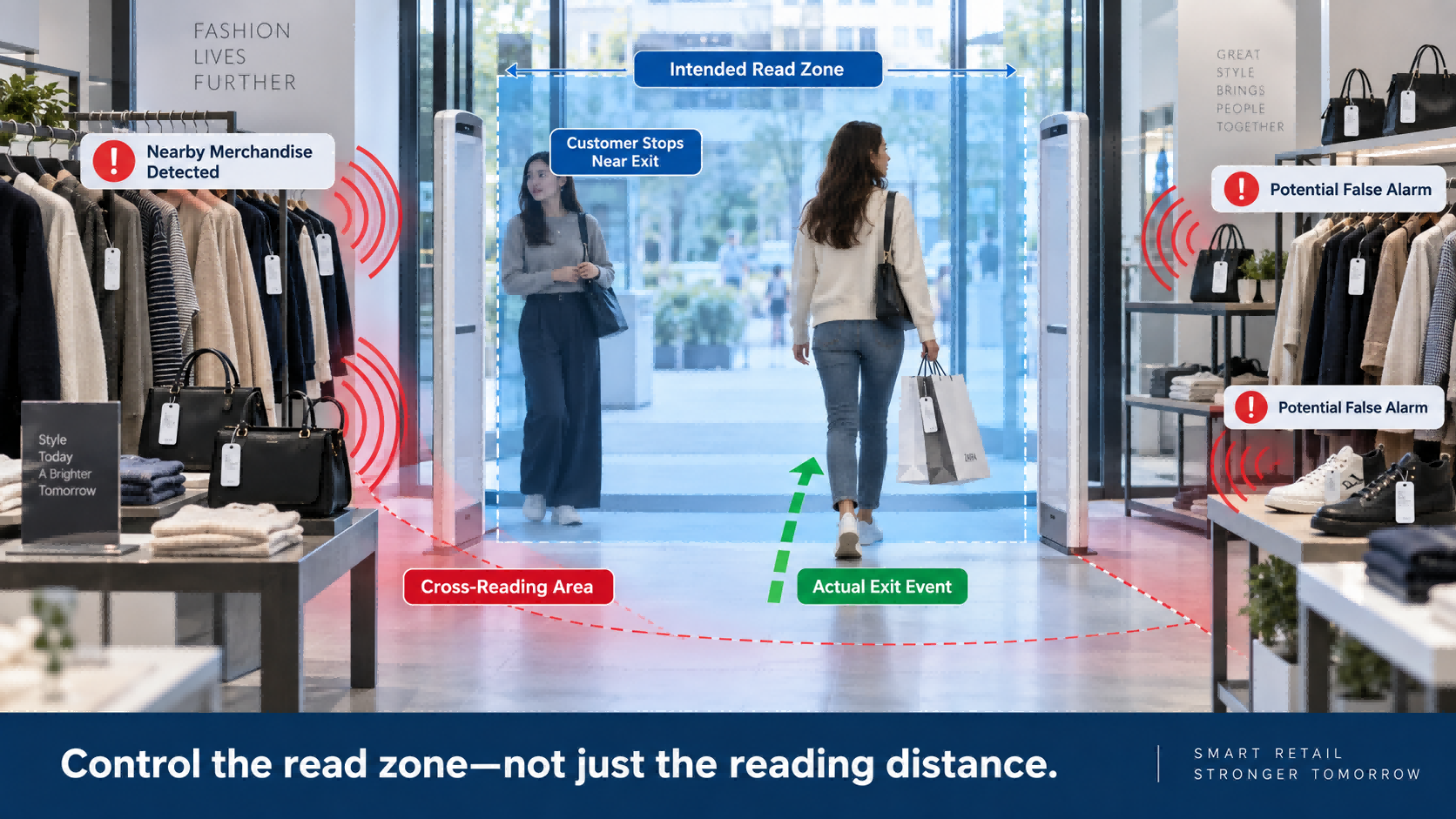
    RFID gates are widely used at retail entrances and exits to monitor tagged merchandise and support loss prevention. But a gate that reads farther is not always a better gate. In retail, one of the biggest challenges is cross-reading: the RFID system detects tags near the entrance even though those products never actually leave the store. That can lead to unnecessary alarms, staff frustration, and poor customer experience. So the real question is not: How far can the RFID gate read? It is: Can the gate monitor the right area and identify the right event?   This guide explains why false alarms happen, what RFID cross-reading means, how to reduce it, and how to choose between three common retail RFID gate designs: Traditional RFID pedestal gates Ceiling-mounted RFID gates AI trajectory-recognition RFID gates   Quick Answer   RFID gate false alarms usually happen because tags outside the intended monitoring zone are also being detected. Common causes include: Merchandise too close to the entrance RF power set too high Poorly controlled read zones Store layout changes Tag placement and orientation Product materials Customers stopping or turning near the exit For most retail stores, the solution is not simply to increase reading power. A better approach is to control the read zone, test the real store environment, and choose the gate architecture that fits the entrance. For a standard retail doorway, a traditional pedestal RFID gate is often the simplest and most cost-effective option. A store that wants a cleaner, open entrance may prefer a ceiling-mounted gate. A more complex entrance with nearby merchandise or difficult movement patterns may justify trajectory-recognition technology.     Why Retail Stores Use RFID Gates   Traditional anti-theft systems mainly answer one question: Did a protected tag pass the exit? RFID gates can add another layer of information. Because RFID tags have unique IDs, the system can potentially know: Which tag was detected When it was detected Whether it matches an authorized or restricted rule Whether an alarm condition should be triggered This makes RFID useful not only for anti-theft alarms, but also for more controlled item-level event management. The value comes from combining: RFID Identification + Read-Zone Control + Alarm Logic   Why Do RFID Gates Produce False Alarms?   False alarms usually come from the interaction between the RFID gate, merchandise, store layout, tags, and system settings.   Merchandise Is Too Close to the Entrance This is one of the most common retail scenarios. A clothing rack, shoe display, or handbag shelf may be positioned close to the doorway. Those products are still inside the store, but their RFID tags may enter the reader's effective range. If the gate treats every detected tag as an exit event, false alarms become more likely.   RF Power Is Set Too High More power does not automatically mean better performance. If RF power is increased too much, the reader may detect merchandise farther inside the store. That can make the read zone much larger than the actual passage. For retail loss prevention, a controlled zone is often more useful than the longest possible read range. A good principle is: Read the passage, not the whole store.   Store Layout, Tag Placement and Product Materials Retail stores change frequently. Racks move. Promotional displays are added. Products may be placed closer to the entrance. At the same time, RFID performance can change depending on: Tag orientation Tag placement Product material Packaging Metal components Liquids or dense materials This is why an RFID gate should always be tested using the actual merchandise and tags used in the store.   What Is RFID Cross-Reading?   RFID cross-reading occurs when a reader detects tags outside the intended monitoring area. Imagine a customer walking through the exit with one tagged jacket. At the same time, five other tagged garments are hanging on a rack just inside the store. The gate should ideally identify the jacket moving through the doorway. If it also reads the five garments that never moved, cross-reading is happening. This is one of RFID's strengths and weaknesses at the same time. RFID does not require direct line-of-sight, which makes it excellent for inventory counting. But at a store entrance, the read zone has no visible physical boundary. That invisible RF boundary has to be controlled carefully.   Three Types of RFID Gates for Retail   There is no single gate design that fits every retail environment. The best choice depends on entrance width, merchandise placement, store design, and the level of movement recognition required.   Type 1: Traditional RFID Pedestal Gate A traditional RFID pedestal gate uses floor-standing units installed on one or both sides of the entrance. This is still the most common and practical RFID gate architecture for many retail stores.     Why Pedestal Gates Are Still Widely Used For a standard entrance with a stable layout and enough distance between merchandise and the doorway, a conventional pedestal gate can be: simple to understand mature in design easy to deploy cost-effective suitable for sound-and-light alarm workflows compatible with item-level RFID identification For many stores, this is all that is needed. Typical Applications Pedestal RFID gates are commonly used in: Apparel stores Footwear stores Bag and accessory stores Libraries Asset rooms Controlled exits What Needs Attention The main challenge is controlling the read zone. Deployment typically needs to consider: Entrance width Antenna position RF power Merchandise distance Tag performance Store layout If merchandise is placed too close to the gate, cross-reading risk can increase. Pedestal units also occupy floor space on both sides of the entrance, which may matter for stores that want a more open visual design.   Type 2: Ceiling-Mounted RFID Gate A ceiling-mounted RFID gate moves the reader and antenna structure above the passage. Instead of using side-mounted pedestal units, the hardware is installed overhead. Main Advantage: A Cleaner Entrance This design can be useful when: Floor space is limited Store aesthetics matter A wider open entrance is preferred Side gate panels are undesirable The physical entrance remains more open. Important Distinction Ceiling-mounted does not automatically mean AI-powered. A conventional ceiling-mounted RFID gate still depends on: Installation height Antenna coverage Entrance width RF power Tag orientation Merchandise position Onsite adjustment Ceiling-mounted describes the installation structure. It does not necessarily describe how the system understands movement.   Type 3: AI Trajectory-Recognition RFID Gate Trajectory-recognition gates add movement analysis on top of RFID detection. Instead of relying mainly on whether a tag is present in the read zone, the system analyzes how the tag moves through the monitored area. This type becomes more useful when: Merchandise is close to the entrance Customers often stop or turn near the exit Simultaneous entry and exit is common Cross-reading is difficult to control The entrance is relatively wide Repeated onsite tuning is undesirable This does not mean every store needs AI trajectory recognition. For a standard, stable entrance, a conventional pedestal gate may remain the better and more economical choice.   Traditional Pedestal vs Ceiling-Mounted vs AI RFID Gate   Feature Traditional Pedestal Gate Ceiling-Mounted Gate AI Trajectory-Recognition Gate Installation Floor-standing Ceiling-mounted Usually ceiling-mounted Floor Space Required Not required Not required RFID Detection Yes Yes Yes Sound/Light Alarm Common Model-dependent Common Entry/Exit Judgment Configuration-based Configuration-based Movement-based Onsite Tuning Usually required Usually required Usually reduced Cross-Reading Control RF zone adjustment Coverage adjustment Movement analysis Best For Standard retail entrances Open-design entrances Complex dynamic entrances   How to Reduce False Alarms and Cross-Reading   Good hardware matters, but deployment quality matters just as much. 1. Keep the Read Zone Focused Do not optimize for maximum reading distance unless the application requires it. The target should be the passage itself. 2. Avoid Excessive RF Power Too much power can make the system read merchandise that is not part of the actual exit event. Power should match the real doorway and product environment. 3. Test Merchandise Near the Entrance Do not test the gate in an empty doorway. Place products where they will actually be displayed. Then check whether nearby static tags are being detected. 4. Test Real Customer Movement Testing should include: Walking in Walking out Stopping near the doorway Turning around Moving quickly Carrying several items Passing left, center, and right A single straight-line test is not enough. 5. Use the Actual Tags and Products Testing should use the same: RFID tag tag placement merchandise packaging product materials planned for deployment. 6. Configure Appropriate Alarm Logic If the gate connects to retail software, alarm rules can become more precise. Depending on the system, the gate may use: whitelist rules blacklist rules authorization status sales status EPC filtering This is better than treating every RFID read as the same event.   Common RFID Gate Selection Mistakes   A large number of RFID gate problems begin before installation. They begin during product selection. Mistake 1: Choosing by Maximum Read Distance A longer reading range sounds attractive, but for retail loss prevention it can increase cross-reading. The best gate is not the one that reads the farthest. It is the one that reads the correct zone.   Mistake 2: Ignoring Merchandise Placement If clothing racks or product displays are close to the entrance, this should be considered before the gate is selected. Do not assume the store layout will remain empty around the doorway.   Mistake 3: Testing Only One Tag A single tag in an open doorway does not represent a real retail environment. Test multiple items, real products, different tag orientations, and real customer movement.   Mistake 4: Forgetting Software Integration The gate may detect a tag correctly, but the alarm logic still depends on what the system knows about that tag. If the project requires: paid vs unpaid status authorized vs restricted items whitelist / blacklist logic then software integration should be considered early.   Mistake 5: Assuming the Most Advanced Gate Is Always Better A standard pedestal gate may be completely suitable for a normal store entrance. Do not add complexity where it is not needed. The right gate is the one that matches the environment and workflow.   Which RFID Gate Is Right for Your Store?   Choose a Traditional Pedestal RFID Gate If: The entrance is standard in width Floor-standing hardware is acceptable Merchandise can stay a reasonable distance from the gate The store layout is relatively stable Cost and mature deployment matter For many retail stores, this is the best starting point.   Choose a Ceiling-Mounted RFID Gate If: You want a visually open entrance Floor space is limited Side gate panels are undesirable Store appearance is important The key question is whether the RF monitoring zone can still be controlled reliably.   Consider a Trajectory-Recognition Gate If: Merchandise is close to the entrance Customers frequently stop or turn near the exit Cross-reading remains difficult after normal tuning The entrance is wide Simultaneous entry and exit happens often The project needs less repeated onsite adjustment This is where movement-based recognition provides more value.   How Far Should Merchandise Be from an RFID Gate?   There is no universal distance. The correct distance depends on: Antenna design RF power Tag type Tag orientation Product material Entrance width Gate architecture Store layout The right distance should be confirmed through real onsite testing. This is also why blindly copying another store's RFID gate settings is not recommended. Two entrances that look similar may perform differently.   Do RFID Gates Need Retail Software Integration?   Not every project requires deep integration. But if the store wants the gate to make more intelligent decisions, software becomes important. A typical workflow may look like: RFID Gate Detects Tag → System Checks Tag Status → Authorized or Restricted? → Record Event / Trigger Alarm For simple anti-theft applications, the configuration may remain relatively basic. For stores that want paid/unpaid status, detailed event records, or more advanced alarm rules, software integration becomes more important.   Questions to Ask Before Buying an RFID Gate   Before comparing products, clarify: 1. How wide is the entrance? 2. How close is merchandise to the doorway? 3. What RFID tags will be used? 4. Which products are being tagged? 5. Is sound and light alarm required? 6. Is whitelist or blacklist logic required? 7. Do you need entry and exit direction recognition? 8. Is floor-standing hardware acceptable? 9. Does the gate need to connect with POS or retail software? 10. How much onsite tuning is acceptable? 11. Does the store layout change frequently? 12. Will multiple tagged items pass at the same time? These questions are usually more useful than simply comparing maximum reading range.   FYJ RFID Gate Options   FYJ provides different RFID gate architectures for retail and controlled-entry applications, including: Traditional RFID pedestal gates Ceiling-mounted RFID gates AI trajectory-recognition RFID gates The appropriate configuration depends on: entrance width product placement tag type alarm requirements store layout software integration expected movement patterns For many standard retail entrances, a conventional pedestal RFID gate remains a practical and economical choice. More complex environments may benefit from ceiling-mounted or trajectory-recognition designs. The goal is not to use the most advanced gate. It is to use the gate that best matches the real entrance.   FAQ   What causes RFID gate false alarms? Common causes include nearby merchandise, oversized read zones, excessive RF power, changing store layouts, tag orientation, product materials, and cross-reading outside the intended passage. What is RFID cross-reading? RFID cross-reading happens when the reader detects tags outside the area it is supposed to monitor. How can RFID cross-reading be reduced? Typical methods include reducing RF power, controlling antenna coverage, testing merchandise near the entrance, using appropriate tags, and choosing a gate architecture that matches the store. What is the difference between a pedestal and ceiling-mounted RFID gate? A pedestal gate uses floor-standing units on the sides of the entrance. A ceiling-mounted gate installs RFID hardware above the passage and keeps the floor area open. Is every ceiling-mounted RFID gate AI-powered? No. Ceiling-mounted refers to installation structure. AI trajectory-recognition adds movement analysis on top of RFID detection. Do RFID gates require onsite tuning? Many conventional RFID gates require onsite adjustment of RF power, antenna coverage, and read zones. The amount of tuning depends on the hardware and environment. Can RFID gates identify unpaid merchandise? The RFID gate can identify individual tags. Determining whether an item is unpaid depends on the system's alarm logic and integration with retail or POS software. How far should merchandise be from an RFID gate? There is no fixed distance that works for every store. It should be determined through testing using the actual gate, tags, products, and entrance layout.   Conclusion   RFID loss prevention is not mainly about how far a gate can read. It is about controlling where the system reads and deciding which events matter. For a standard retail entrance, a traditional pedestal RFID gate may be the simplest and most economical choice. For stores that need a cleaner, more open entrance, ceiling-mounted RFID gates offer another option. For more complex environments with nearby merchandise, wide passages, or difficult movement patterns, trajectory-recognition gates can add another layer of control. Start with the entrance. Look at merchandise placement, customer movement, tag type, alarm requirements, and software integration. Then choose the RFID gate. Not the other way around.
    LEER MÁS

  • RFID for Fashion Retail: How Clothing Stores Can Improve Inventory, Checkout, Product Finding and Loss Prevention
    RFID for Fashion Retail: How Clothing Stores Can Improve Inventory, Checkout, Product Finding and Loss Prevention
    Sep 18, 2026
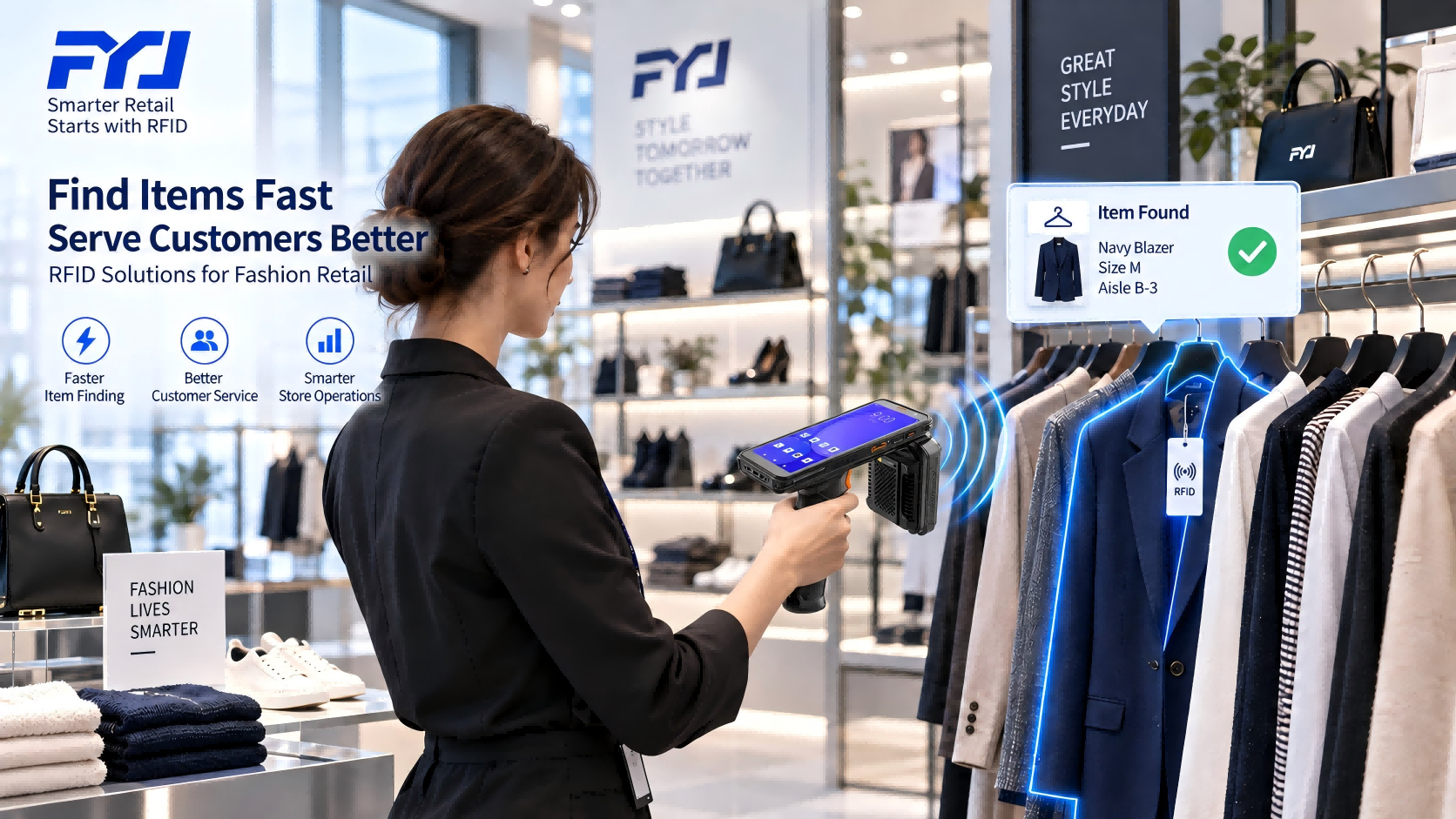
    Fashion retail moves fast. SKUs keep increasing, product styles change quickly, and customers expect stores to know exactly what is available, where it is, and how quickly it can be purchased. For many clothing retailers, however, daily operations still depend heavily on manual counting, barcode scanning, spreadsheets, and staff experience. That creates a familiar set of problems: Inventory records do not match physical stock Stocktaking takes too long Checkout slows down during peak periods Products go missing without a clear trace Staff spend too much time searching for sizes or styles Store and warehouse data are not always synchronized RFID offers a different way to manage these workflows. By assigning each item a unique RFID identity and combining tags with handheld readers, RFID checkout devices, access control equipment, and retail management software, stores can manage inventory and item movement more efficiently across the full retail process.   Quick Answer   An RFID retail system can help fashion stores improve five areas: Inventory counting — batch-read many tagged items instead of scanning one by one Checkout — read multiple products at once Product finding — use handheld RFID signal strength to locate a specific item Loss prevention — monitor tagged items at store exits Traceability — keep item movement and sales records connected in one system For fashion retailers with many SKUs, multiple stores, or frequent inventory movement, these improvements can significantly reduce manual work and improve stock visibility.   Why Fashion Retail Stores Struggle with Inventory Management   Fashion retail is more difficult to manage than it may look from the customer side.   A store may carry hundreds or thousands of combinations across: style color size season brand location Once inventory is distributed across stores, backrooms, warehouses, and online channels, small recording errors quickly become larger operational problems.   1. Inventory Data Becomes Inaccurate Many retailers still rely on manual entry or disconnected systems. When product codes, warehouse rules, or store processes are inconsistent, headquarters may not have a reliable real-time view of inventory. Typical problems include: missed inbound records missed transfer records incorrect stock adjustments delayed data updates differences between system stock and physical stock The result is simple: The system says an item exists, but staff cannot find it. Or the store appears out of stock even when the item is physically available.   2. Stocktaking Takes Too Long Traditional fashion store inventory counting is labor-intensive. When every item must be checked manually or scanned individually, a monthly or quarterly stocktake can take hours or even days. For stores with a large number of SKUs, this creates several problems: stores may need to pause normal operations employees are pulled away from customer service counting errors accumulate results become outdated quickly The more frequently inventory changes, the harder it becomes to rely on slow counting methods.   3. Checkout Becomes a Bottleneck Barcode checkout works well when the number of items is small. But during busy periods, scanning products one by one creates queues. If a customer buys several garments, each item needs to be positioned and scanned individually. This adds time at the checkout counter and increases staff workload. For high-traffic fashion stores, checkout speed can directly affect the customer experience.   4. Losses Are Difficult to Trace Retail loss does not always come from one clear source. A product may: leave the store without being properly recorded be transferred incorrectly be misplaced be entered incorrectly disappear during daily operations When the store lacks item-level movement records, it becomes difficult to identify where the difference occurred. This is especially challenging for higher-value apparel, shoes, bags, accessories, and visually similar products.   5. Finding the Right Item Takes Too Long A common retail scenario is simple: A customer likes a product but needs another size or color. The system may show that the item is in stock, but the employee still has to find it. In a crowded stockroom, that can take several minutes. The longer the customer waits, the greater the chance that the sale is lost.   How an RFID Retail Solution Changes Store Operations   FYJ’s RFID retail approach combines software and RFID hardware to give each tagged item a unique digital identity and connect that identity to daily retail workflows. A typical setup may include: RFID tags RFID handheld PDA RFID printer RFID checkout equipment RFID access control retail or inventory management software The goal is not simply to “add RFID”. The goal is to make item movement easier to identify, record, and manage.     1. Faster Inventory Counting with RFID Handhelds One of the most immediate improvements is stocktaking. With an RFID handheld PDA such as the FYJ F9850, employees do not need to scan every barcode individually. They can move along racks or shelves while the handheld reads multiple RFID tags in batches. In practice, this changes the workflow from: Find Item → Aim Scanner → Scan One by One to: Walk Through Area → Read Multiple Tags → Upload Results Inventory data can then be compared with system records and used to generate inventory reports. In FYJ retail projects, this approach has helped reduce counting time from days to hours and improve stock accuracy.     2. Faster Checkout with RFID RFID can also change the checkout process. Instead of scanning every item separately, multiple RFID-tagged products can be identified together. With an RFID self-checkout or RFID checkout device, customers or staff can place several products into the reading area. The system reads the tagged items and generates the order total. This is particularly useful when customers purchase multiple garments at once. The value is not only faster payment. It also reduces repetitive scanning work at the checkout counter.   3. Faster Product Finding with RFID Handhelds RFID handheld devices can also help employees find a specific item. If a product is recorded in the system but difficult to locate, staff can search for the item and use RFID signal strength as a guide. As the employee moves closer to the tagged item, the signal becomes stronger. This is useful for: finding a specific size finding a particular color locating a misplaced item searching stockrooms checking backroom inventory In stores where employees frequently move between the sales floor and stockroom, this can reduce customer waiting time.     4. RFID Loss Prevention at Store Exits RFID access control can help stores monitor tagged items moving through entrances and exits. When the gate is integrated with the retail management system, the system can use tag status to help distinguish normal and unauthorized product movement. For example: purchased product → normal passage restricted or unpaid product → alarm event This adds another layer of control to store operations. For retailers, the value is not only the alarm itself. The more important part is that item movement can become part of a traceable digital record.   5. Full Item Traceability RFID works best when it is connected to software. From receiving to sale, item activity can be recorded throughout the process. A typical product record may include: receiving warehouse entry transfer store arrival inventory count checkout outbound record final sale This gives management a clearer view of what happened to each product and where differences may have occurred. For multi-store retailers, that can also improve coordination between headquarters, stores, and warehouses.   Real RFID Retail Project Examples   The strongest value of RFID becomes easier to understand when looking at real store environments.   Case 1: Apparel Retail Store in Dongguan Challenge The store carried a large number of SKUs. Traditional manual stocktaking required several days, while inventory data lagged behind actual store conditions. The retailer also faced frequent stock discrepancies and pricing confusion. FYJ Solution The store implemented an FYJ RFID retail management solution to improve inventory control and daily store operations. Result Inventory counting time was reduced from several days to several hours. Inventory accuracy and physical-to-system consistency improved to 99%.   Case 2: Cross-Border Fashion Retail Operation Background A fashion retail company operated a warehouse in China together with stores and supporting warehouse operations in Thailand. The company needed to improve overseas store inventory counting, checkout speed, and inventory synchronization. FYJ Solution FYJ deployed an RFID retail management solution across the relevant inventory and store workflows. Result Inventory counting efficiency improved by 80% Checkout time was reduced by 50% Inventory data between domestic and overseas locations could be synchronized in real time For this type of business, RFID supported not only individual store efficiency but also better visibility across locations.   Case 3: Department Store Retailer in Xinjiang Challenge The customer managed a large variety of department store products. The number of SKUs was high, products were visually similar, and manual counting was difficult and error-prone. The value of some products also increased the importance of stock accuracy and loss prevention. FYJ Solution The customer implemented an FYJ RFID retail management solution. Result Stocktaking efficiency improved by more than 10× Inventory accuracy reached 99% Loss reduction improved by 9%–30% Replenishment decisions became more accurate   Which Fashion Retailers Benefit Most from RFID?   RFID is especially useful when a store has one or more of these characteristics: Retail Situation Why RFID Helps Large number of SKUs Faster batch inventory counting Frequent stock movement Better item-level visibility Multiple stores Easier inventory synchronization High checkout volume Faster multi-item identification Difficult stockroom search Faster item finding Higher-value products Better movement records and loss control Frequent stock discrepancies Better reconciliation between physical and system inventory   A very small store with limited inventory may not need a full RFID system. The value becomes clearer as inventory volume, store count, and operational complexity increase.   Barcode or RFID for Fashion Retail?   Barcode is still useful in many retail environments. The difference is mainly how items are identified. Barcode requires line-of-sight usually reads one item at a time low implementation cost suitable for simple checkout and inventory workflows RFID does not require direct line-of-sight supports batch identification supports faster stocktaking can assist with product locating can support automated entry/exit monitoring For many retailers, the decision is not necessarily “barcode or RFID only.” A hybrid setup is also possible. Barcode may continue to be used for selected workflows while RFID is introduced where batch reading or movement tracking provides more value.   What Should Retailers Check Before Deploying RFID?   Before choosing hardware, it is important to understand the store workflow. Ask: How many SKUs does each store manage? How long does a full stocktake take today? How often do stock discrepancies occur? Does the retailer operate multiple stores? Is inventory shared with an online channel? Is faster checkout important? Do employees frequently search for missing products? Is loss prevention a major concern? Does the existing POS or retail system need integration? These questions usually matter more than choosing the reader with the longest reading distance.   FYJ RFID Retail Solution   FYJ provides integrated RFID software and hardware for retail inventory and store management. Depending on the application, a project may combine: RFID tags RFID handheld PDA RFID printer RFID checkout devices RFID access control retail management software inventory management functions The solution can support workflows from receiving and inventory counting to checkout, product finding, movement monitoring, and reporting. The exact configuration should be based on the store’s actual operation rather than using the same hardware combination for every project.   FAQ   What is RFID in fashion retail? RFID in fashion retail uses RFID tags and readers to identify products without scanning each barcode individually. It can support inventory counting, checkout, product finding, movement tracking, and loss prevention. How does RFID improve stocktaking? RFID handheld readers can identify multiple tagged items in batches, allowing staff to count inventory much faster than scanning products one by one. Can RFID help employees find a missing product? Yes. An RFID handheld can use signal strength to help guide employees toward a specific tagged item. Can RFID improve checkout speed? Yes. RFID checkout devices can identify several tagged products at the same time instead of requiring individual barcode scans. Can RFID work across multiple stores? Yes. When connected to a centralized retail or inventory management platform, RFID data can support inventory visibility across different locations. Does RFID replace barcode completely? Not necessarily. Many retailers can use RFID and barcode together depending on the workflow.   Conclusion   RFID can improve fashion retail operations in ways that go beyond faster inventory counting. When tags, handheld devices, checkout equipment, access control, and software work together, retailers can gain better visibility into how products move through stores and warehouses. For fashion retailers managing many SKUs, multiple locations, frequent stock movement, or recurring inventory discrepancies, RFID can help make inventory more accurate, checkout faster, product finding easier, and store operations more traceable. The key is not simply adding RFID hardware. It is designing the RFID workflow around how the store actually operates.
    LEER MÁS
  • Las puertas RFID con IA están transformando la prevención de pérdidas en el comercio minorista: cómo FYJ Omni-Eye mejora el reconocimiento de entrada y salida.
    Las puertas RFID con IA están transformando la prevención de pérdidas en el comercio minorista: cómo FYJ Omni-Eye mejora el reconocimiento de entrada y salida.
    Sep 11, 2026
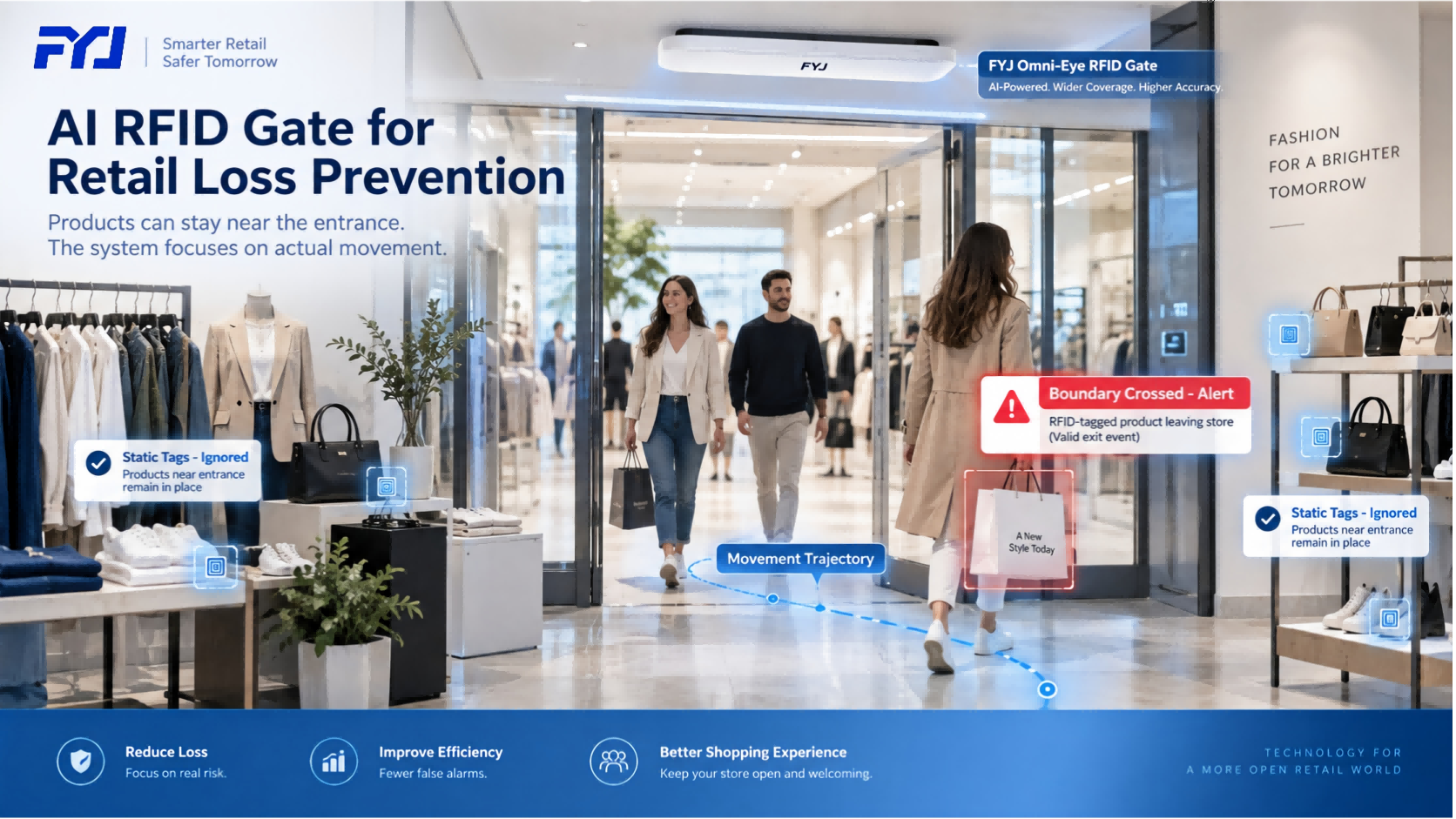
     Las puertas de seguridad RFID se utilizan en el sector minorista desde hace años.La lógica tradicional es sencilla: cuando se detecta una etiqueta cerca de la salida, el sistema decide si debe activarse una alarma.Ese enfoque funciona en entornos sencillos. Pero las tiendas minoristas modernas son cada vez más complejas.Los productos se exhiben más cerca de las entradas. Los clientes pueden detenerse cerca de la puerta, probarse zapatos o ropa, pasear de un lado a otro o llevar varios artículos a la vez. Al mismo tiempo, los minoristas buscan aprovechar al máximo cada espacio de la tienda, en lugar de dejar una gran área vacía alrededor del lector RFID.Esto crea un problema:¿Cómo puede una puerta RFID distinguir entre una etiqueta que simplemente está cerca y un artículo que realmente está saliendo de la tienda?El FYJ Puerta RFID Omni-Eye con IA aborda este problema de manera diferente.En lugar de tratar cada señal RFID detectada como un evento, el sistema analiza la movimiento de etiquetas RFID a través del espacio y utiliza el reconocimiento de trayectorias basado en IA para determinar si un elemento ha cruzado realmente el límite monitorizado.Eso cambia la forma en que se puede utilizar el control de acceso RFID en el sector minorista. ¿Por qué las puertas RFID tradicionales pueden resultar problemáticas en las tiendas minoristas? La entrada de un establecimiento comercial rara vez es un entorno controlado.Los clientes se detienen, se dan la vuelta, miran los estantes cercanos y se mueven de forma impredecible.Los productos también pueden colocarse muy cerca de la entrada.Para una puerta RFID convencional, esto puede generar varios desafíos:- Las etiquetas cerca de la entrada pueden leerse incluso cuando los productos no salen.- La mercancía estática puede interferir con el movimiento de las etiquetas.- Varios productos pueden pasar juntos por la puerta.- Los movimientos rápidos pueden dificultar la identificación.- La distribución de las tiendas puede requerir ajustes de parámetros repetidos.- Las falsas alarmas pueden interrumpir tanto a los clientes como a los empleados.Cuando las falsas alarmas se producen con demasiada frecuencia, el personal deja de confiar gradualmente en el sistema.Por eso, el rendimiento de las puertas RFID no debe evaluarse únicamente en función de la distancia de lectura.La pregunta más importante es:¿Puede el sistema determinar si el elemento etiquetado realmente cruzó el límite?  1. La zona de entrada puede volver a ser un espacio comercial utilizable. Un problema práctico que solemos ver en los proyectos de comercio minorista con tecnología RFID es la zona que rodea la entrada.Con las puertas RFID convencionales, los minoristas pueden mantener deliberadamente los productos alejados de la puerta porque las etiquetas cercanas pueden generar interferencias o lecturas no deseadas.Eso significa que se pierde valioso espacio de exhibición.La puerta RFID Omni-Eye de FYJ utiliza el análisis de la trayectoria de fase y el reconocimiento de movimiento para distinguir entre los productos que permanecen dentro de la tienda y los productos que realmente salen por la puerta.Esto significa mercancías como:- Ropa- Zapatos- Bolsas- Accesorios- Otros productos con etiquetas RFIDSe puede colocar más cerca de la entrada sin depender únicamente de la distancia al lector para evitar alarmas no deseadas.Un cliente puede permanecer cerca, detenerse, darse la vuelta o moverse por la zona de entrada.El factor importante no es simplemente si la etiqueta se puede leer.Así es como se mueve la etiqueta.Esto ofrece a los minoristas mayor flexibilidad a la hora de planificar la presentación de los productos en sus tiendas y el flujo de clientes. 2. De “Etiqueta detectada” a “Movimiento comprendido” El control de acceso RFID tradicional a menudo depende en gran medida de si una etiqueta ha entrado o no en una zona legible.El sistema Omni-Eye analiza más información.Para cada etiqueta RFID, el sistema puede analizar los cambios en su trayectoria de fase y proceso de movimiento para determinar su dirección y relación con el límite monitorizado.En lugar de tomar una decisión a partir de un único evento de señal, el sistema evalúa un proceso de movimiento continuo.Piensa en la diferencia de esta manera:Lógica tradicionalEtiqueta detectada → Procesar etiqueta → Decidir si se debe generar una alarmaLógica basada en trayectoriasEtiqueta detectada → Seguimiento del movimiento → Análisis de la dirección → Determinar si se cruzó el límite → Decidir si se debe activar la alarmaEsa capa adicional de análisis de movimiento es lo que hace que el sistema sea más adecuado para entradas de comercios complejas. 3. La lectura cruzada se vuelve más fácil de controlar. La lectura cruzada es uno de los problemas más comunes en los proyectos RFID.Un lector puede detectar etiquetas que estén físicamente cerca de la entrada, pero que no formen parte del evento real de entrada o salida.Algunos ejemplos son:- Ropa expuesta junto a la entrada- Productos colocados en un estante cercano- Artículos que portan los clientes que permanecen dentro de la tienda.- Etiquetas RFID estáticas dentro del rango circundante del lectorSi cada etiqueta legible se trata como un evento de salida, resulta difícil evitar las alarmas innecesarias.La puerta RFID FYJ Omni-Eye no depende únicamente de si la etiqueta es visible para el lector.También tiene en cuenta si la etiqueta se está moviendo y cómo cambia ese movimiento con el tiempo.Por lo tanto, las etiquetas estáticas o no relacionadas pueden tratarse de manera diferente a las etiquetas que se mueven realmente a través del pasaje monitorizado.Para los minoristas, esto significa menos situaciones en las que haya que rediseñar la distribución de la tienda simplemente para dar cabida al sistema RFID. 4. El movimiento simultáneo de varios artículos es una situación real en el comercio minorista. Un cliente rara vez lleva los productos uno por uno.Pueden irse con:- Varias prendas apiladas juntas- Zapatos dentro de una bolsa de compras- Múltiples accesorios- Productos parcialmente bloqueados por otros artículosEstas situaciones son mucho más difíciles que leer una sola etiqueta RFID en un entorno abierto.La puerta RFID Omni-Eye analiza continuamente el proceso de movimiento de múltiples etiquetas a medida que pasan por el área monitoreada.Esto lo hace idóneo para entornos dinámicos con múltiples etiquetas, donde varios productos etiquetados con RFID pueden entrar o salir al mismo tiempo.El objetivo no es simplemente maximizar las lecturas de etiquetas sin procesar.Se trata de conectar esas lecturas con el movimiento real.Esa distinción cobra especial importancia en tiendas concurridas. 5. Un movimiento rápido no debe significar un movimiento poco claro. Otro problema surge cuando los clientes pasan rápidamente por una entrada.El sistema dispone de menos tiempo para recopilar información.Un sistema simple basado en umbrales puede tener dificultades para decidir si la etiqueta:- fue detectado solo brevemente,- estaba cerca de la entrada,- o en realidad cruzaron la salida.El reconocimiento de trayectorias proporciona al sistema más contexto.A medida que la etiqueta RFID se mueve, las características cambiantes de su señal crean un patrón de movimiento.El algoritmo Omni-Eye analiza ese patrón para determinar la relación de entrada o salida, en lugar de tomar la decisión a partir de una lectura aislada.Esto resulta especialmente útil en:- Tiendas minoristas de alto tránsito- Tiendas de moda- Tiendas de calzado- Tiendas de bolsos y accesorios- Entradas concurridas con frecuente movimiento de clientes 6. Menor dependencia de ajustes repetidos in situ Los equipos de proyectos RFID saben que la instalación es solo una parte del trabajo.La parte más difícil puede ser la puesta en marcha.Las puertas tradicionales pueden necesitar ajustes repetidos según:- Posición en el estante- Densidad de mercancías- Ancho de entrada- Orientación de la etiqueta- Patrones de tráfico de clientes- Señales RFID circundantesSi se mueve un estante, se cambia la disposición de la pantalla o se rediseña la entrada, es posible que sea necesario volver a comprobar los parámetros.La puerta RFID FYJ Omni-Eye está diseñada para reducir esta dependencia.Dado que el análisis del movimiento se basa en la trayectoria de la etiqueta en lugar de solo en umbrales de señal fijos, el sistema puede gestionar una mayor parte de la lógica de reconocimiento a nivel del dispositivo.El diseño actual de Omni-Eye está pensado para una implementación plug-and-play, sin necesidad de ajustes repetidos de parámetros in situ. El producto puede instalarse y ponerse en funcionamiento con muchos menos ajustes específicos del entorno.Para una tienda, eso ahorra tiempo de puesta en marcha.Para un minorista que abre docenas de establecimientos, la diferencia cobra mucha más importancia. 7. Por qué esto es importante para los integradores de sistemas El valor de un producto RFID no está determinado únicamente por su rendimiento en el laboratorio.Para los integradores, hay otra pregunta importante:¿Se puede implementar la misma solución repetidamente en diferentes instalaciones de clientes?Cada tienda minorista es diferente.Es posible que una de las ubicaciones tenga una entrada estrecha.Otro podría colocar estantes cerca de la puerta.Un tercero puede tener un alto flujo de clientes.Si cada proyecto requiere una puesta a punto manual exhaustiva, la implementación se vuelve más lenta y costosa.Una puerta de enlace que puede gestionar mayores diferencias ambientales mediante su propia lógica de reconocimiento facilita la implementación estandarizada.Eso puede ayudar a reducir:- Tiempo de puesta en servicio- Visitas repetidas al sitio- Ajuste de parámetros- Carga de trabajo de mantenimiento- Diferencias entre implementaciones de tiendasEn los proyectos RFID para múltiples tiendas, la repetibilidad puede ser tan importante como el rendimiento de la lectura. 8. La IA en el borde permite tomar decisiones a nivel local. La puerta RFID Omni-Eye no se limita a enviar datos brutos de las etiquetas a otro lugar y esperar a que otro sistema tome la decisión.Su arquitectura de hardware incluye procesamiento local para el análisis de movimiento RFID. El diseño original combina hardware de lector RFID con procesamiento de IA en el borde de la red, lo que permite evaluar localmente la información de trayectoria.El procesamiento local ayuda a reducir el retraso entre:Movimiento de la etiqueta → Reconocimiento → Decisión → AlarmaEsto resulta especialmente útil para el control de accesos, donde el sistema necesita reaccionar mientras la persona o el objeto aún está pasando por la entrada.El resultado es un dispositivo periférico más completo, en lugar de un simple punto de recogida de datos RFID. 9. El diseño montado en el techo modifica la distribución física de la tienda. Muchas puertas de seguridad RFID tradicionales ocupan espacio en el suelo a ambos lados de la entrada.Eso puede afectar a:- Aspecto de la tienda- Flujo de clientes- Ancho de entrada- Exhibición del producto- Diseño de instalaciónLa puerta RFID FYJ Omni-Eye utiliza una estructura montada en el techo.El lector se sitúa encima de la zona monitorizada, en lugar de al lado.Para las tiendas minoristas modernas, esto crea una entrada más despejada al tiempo que mantiene el hardware de monitoreo RFID fuera del recorrido principal de los clientes.La configuración actual también se puede ampliar con unidades Omni-Eye auxiliares para admitir anchos de monitorización de hasta 6 metros, lo que proporciona mayor flexibilidad para entradas más anchas. 10. Las puertas RFID se están convirtiendo en algo más que dispositivos antirrobo. El papel de una puerta RFID está cambiando.En el pasado, la pregunta principal era:¿Salió de la tienda algún producto sin pagar? Eso sigue siendo importante.Pero ahora los minoristas se hacen preguntas más amplias:- ¿Qué artículos entraron o salieron?- ¿En qué dirección se movieron?¿Pueden permanecer expuestos los productos cercanos sin causar interferencias?¿Pueden moverse juntos varios objetos etiquetados?¿Es posible integrar el sistema de control de accesos con el software de inventario o de venta minorista?¿Se puede implementar la misma arquitectura de hardware en varias tiendas?Una vez que una puerta RFID puede identificar el movimiento de forma más inteligente, pasa a formar parte de una infraestructura de datos minorista más amplia.Los mismos eventos de entrada y salida pueden, potencialmente, dar soporte a flujos de trabajo que impliquen el movimiento de inventario, la gestión de tiendas y la monitorización de activos cuando se integran con la plataforma de software adecuada. ¿Dónde tiene más sentido instalar una puerta RFID con inteligencia artificial? El enfoque Omni-Eye es especialmente relevante cuando un proyecto presenta una o más de estas condiciones: Escenario minoristaPor qué es importanteMercancía cerca de la entradaAyuda a distinguir los productos estáticos del movimiento de salida real.Alto tráfico de clientes Más adecuado para el movimiento frecuente alrededor de la entrada.Varios artículos transportados juntosAdmite el reconocimiento dinámico de múltiples etiquetas.Entradas ampliasLa arquitectura del techo puede admitir áreas de monitoreo más amplias.Varias ubicaciones de tiendasLa reducción de la necesidad de ajustes ayuda a estandarizar la implementación.El diseño de la tienda es importante. La instalación en el techo evita las estructuras de puertas que se apoyan en el suelo.Alarmas falsas frecuentesEl análisis del movimiento proporciona más contexto que la simple detección de señales. Esto no significa que todas las tiendas minoristas necesiten automáticamente una puerta RFID con inteligencia artificial.Un entorno sencillo con poco tráfico y una entrada despejada puede funcionar bien con una puerta RFID convencional.El valor se hace más evidente a medida que el entorno se vuelve más complejo. ¿Qué preguntas deben hacerse los minoristas antes de elegir una puerta RFID? Antes de comparar productos individuales, pregúntese:1. ¿Los productos están expuestos cerca de la entrada?Si la respuesta es afirmativa, la lectura cruzada y el filtrado de etiquetas estáticas son importantes.2. ¿Qué tan ancha es la entrada?Esto afecta a la arquitectura de la antena y del sistema.3. ¿Los clientes se detienen o se mueven con frecuencia cerca de la salida?El reconocimiento del movimiento cobra mayor importancia.4. ¿Pasarán varios productos por la puerta al mismo tiempo?Se debe probar el rendimiento con múltiples etiquetas.5. ¿Cuánta puesta a punto in situ es aceptable?Esto es de suma importancia para la implementación en múltiples tiendas.6. ¿Es necesario que la puerta se conecte con el software de venta minorista o de inventario existente?El hardware debe evaluarse junto con los requisitos de integración del sistema. Enfoque de FYJ para la monitorización del acceso a comercios minoristas mediante RFID En FYJ, consideramos el control de acceso RFID como una parte más del flujo de trabajo general del sector minorista.Las etiquetas RFID, las impresoras, los lectores portátiles, los dispositivos de pago, el hardware y el software de control de acceso, en última instancia, deben funcionar conjuntamente.La puerta RFID Omni-Eye añade una capa de reconocimiento de movimiento más inteligente en la entrada de la tienda.En lugar de tratar cada etiqueta RFID detectada como una posible alarma, el sistema se centra en comprender:¿Hacia dónde se dirige la etiqueta y ha cruzado realmente el límite vigilado?Se trata de un pequeño cambio en la pregunta, pero un cambio importante en la forma en que se pueden interpretar los datos de las puertas RFID.Para los minoristas e integradores de sistemas que trabajan con entradas complejas, exhibiciones de productos densas o implementaciones en varias tiendas, esto ofrece otra forma de mejorar la monitorización del acceso RFID sin tener que diseñar toda la tienda en torno a la puerta de acceso. Preguntas frecuentes ¿Qué es una puerta RFID con IA?Una puerta RFID con inteligencia artificial combina la detección de etiquetas RFID con algoritmos que analizan el movimiento de la etiqueta, su trayectoria u otros cambios de señal para tomar decisiones de entrada y salida más fundamentadas.¿En qué se diferencia el FYJ Omni-Eye de una puerta RFID tradicional?Los sistemas de acceso tradicionales suelen depender en gran medida de si se detecta una etiqueta dentro de una zona de lectura. Omni-Eye analiza la trayectoria de movimiento de la etiqueta para determinar si realmente cruza el límite monitorizado.¿Se pueden colocar los productos cerca de la puerta RFID?El método de reconocimiento basado en la trayectoria está diseñado para distinguir mejor las etiquetas estáticas o cercanas de los productos que realmente se mueven a través de la entrada, lo que hace que la comercialización en la entrada sea más flexible.¿La puerta RFID Omni-Eye requiere configuración in situ?El diseño actual admite la implementación plug-and-play y está diseñado para reducir la necesidad de realizar ajustes de parámetros repetidos in situ.¿Puede el sistema reconocer varias etiquetas RFID a la vez?Sí. El producto está diseñado para escenarios de reconocimiento dinámico de múltiples etiquetas.¿La puerta RFID es apta únicamente para el comercio minorista?No. La misma tecnología también se puede aplicar a almacenes, salas de activos, bibliotecas, archivos y otros entornos que requieran control de entrada y salida mediante RFID. Conclusión La próxima generación de puertas RFID no se trata simplemente de leer etiquetas desde más lejos.Se trata de comprender qué función cumplen realmente esas etiquetas.En una tienda moderna, un producto puede estar cerca de la entrada sin necesidad de salir. El cliente puede detenerse, darse la vuelta o llevar varios productos a la vez. La tienda no debería tener que sacrificar valioso espacio de exhibición simplemente porque haya un lector RFID cerca.Mediante la combinación de reconocimiento de trayectoria de fase basado en IA, procesamiento de múltiples etiquetas, computación perimetral y hardware montado en el techo, la puerta RFID FYJ Omni-Eye está diseñada para que la monitorización del acceso RFID se adapte mejor a las condiciones del mundo real.Para los minoristas, esto puede significar menos interrupciones innecesarias y diseños de tienda más flexibles.Para los integradores de sistemas, esto puede significar una implementación más sencilla y una solución más práctica de reproducir en múltiples ubicaciones.
    LEER MÁS

dejar un mensaje

dejar un mensaje
Si está interesado en nuestros productos y desea conocer más detalles, deje un mensaje aquí, le responderemos lo antes posible.
entregar

Página de inicio

Productos

Whatsapp

contacto

Need Help? Chat with us

Start a Conversation

Hi! Click one of our members below to chat on